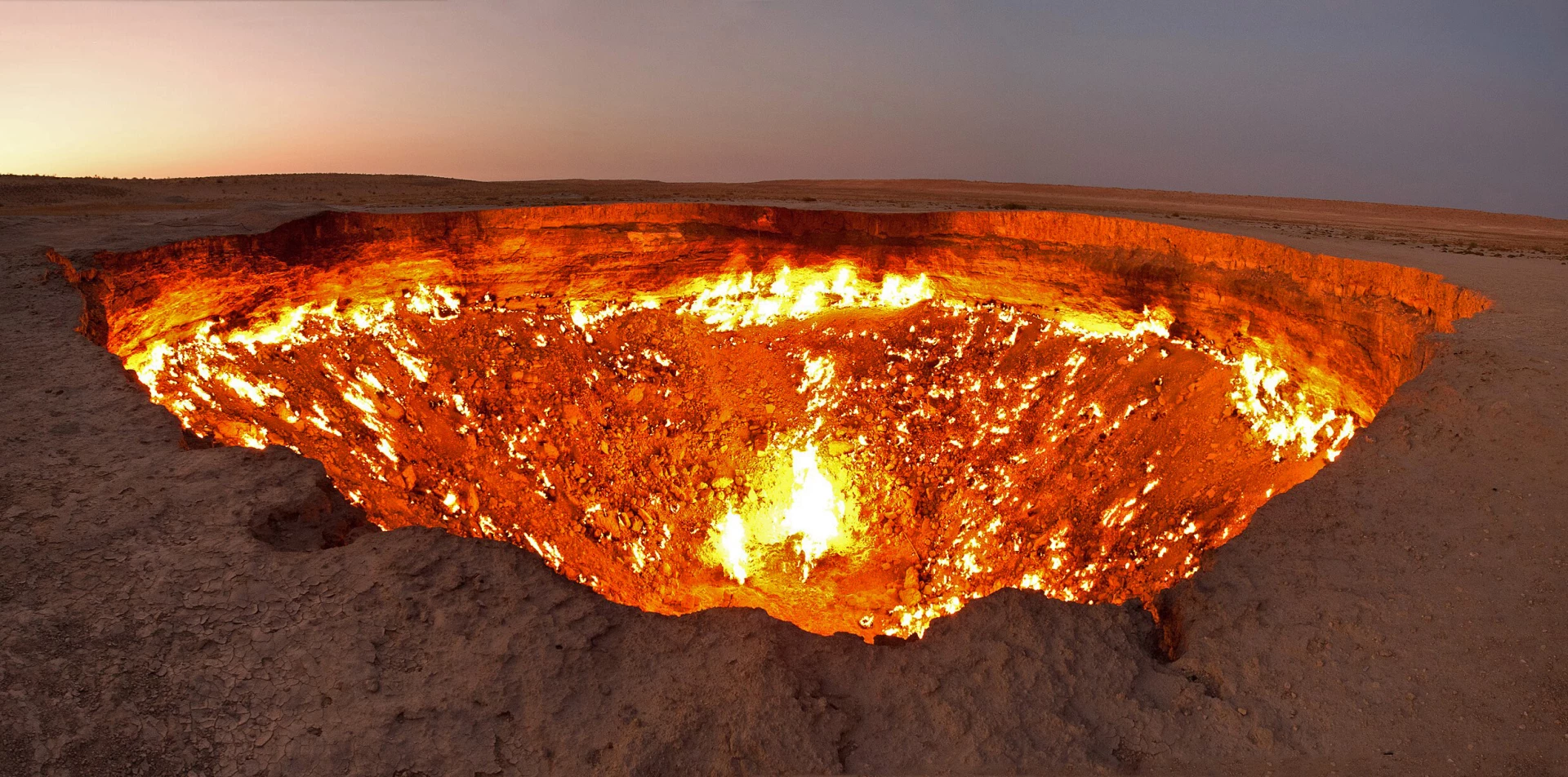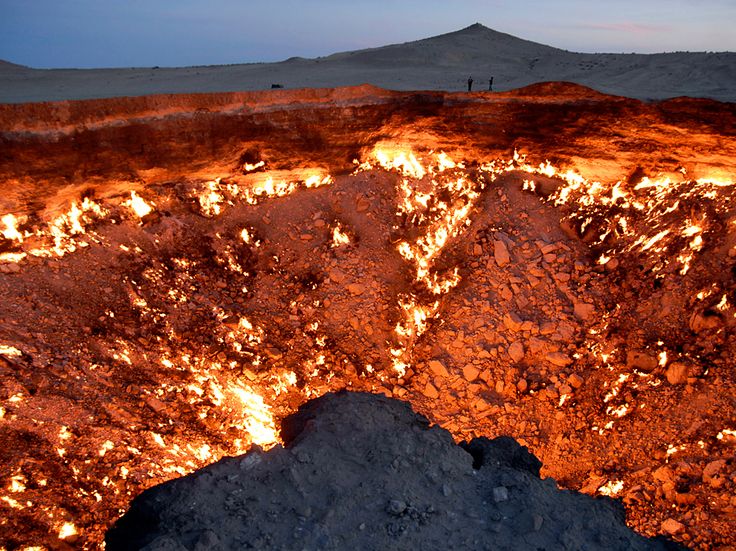
The Darvaza Gas Crater, often called the “Door to Hell,” is one of Turkmenistan’s most striking and otherworldly natural landmarks. Located in the Karakum Desert, this gigantic burning crater has been aflame for decades, creating a surreal spectacle of fire and glowing gases.
The crater is about 70 meters (230 feet) deep and 60 meters (200 feet) wide. The fire has been burning continuously since 1971, when a Soviet drilling accident collapsed an underground natural gas cavern. To prevent the spread of methane, geologists set it on fire — and it has been burning ever since.
Its unique appearance makes it a must-visit for adventure travelers, photographers, and desert explorers.
Region: Ahal Province, Turkmenistan
Coordinates: 40.2522° N, 58.4398° E
Accessibility: Approximately 260 km north of Ashgabat, the capital of Turkmenistan.
The crater is in the middle of the Karakum Desert, surrounded by sand dunes and sparse desert vegetation, creating a stark, alien landscape.
Unique Phenomenon: One of the few continuously burning craters in the world.
Photography: Dramatic visuals, especially at night when flames illuminate the desert.
Adventure: A rare desert camping experience around a natural gas fire.
Cultural Interest: Learn about the Soviet-era drilling accident and local legends.
Night-time spectacle: Watching the crater glow against the desert sky is truly unforgettable.
Spring (March – May): Mild temperatures, ideal for desert travel.
Autumn (September – November): Cooler desert climate, more comfortable for camping.
Summer (June – August): Extremely hot — daytime temperatures in the Karakum Desert can exceed 45°C (113°F).
Winter (December – February): Cold desert nights, possible snow, but fewer tourists.
Tip: The crater is spectacular both during the day and night, but the flames are most dramatic after sunset.
Walk along the rim (with caution — the edges are unstable) and observe the fire, smoke, and glowing gases.
Best time for photography: sunset and night.
Set up tents nearby for an overnight desert experience.
Stargazing is excellent due to minimal light pollution.
Capture the fiery crater with surrounding desert dunes for a surreal, otherworldly landscape.
Long-exposure night shots make the flames appear even more dramatic.
Explore the surrounding Karakum Desert in 4×4 vehicles.
Optional camel or jeep tours for a traditional desert adventure.
Drive 260 km north via the Ashgabat–Turkmenbashi highway.
Vehicles: A 4×4 car or off-road vehicle is highly recommended due to desert terrain.
Travel time: Approx. 4–6 hours, depending on road and desert conditions.
Desert Camping: Most visitors camp near the crater to experience the fire at night.
Hotels in Ashgabat: For a base before or after the trip.
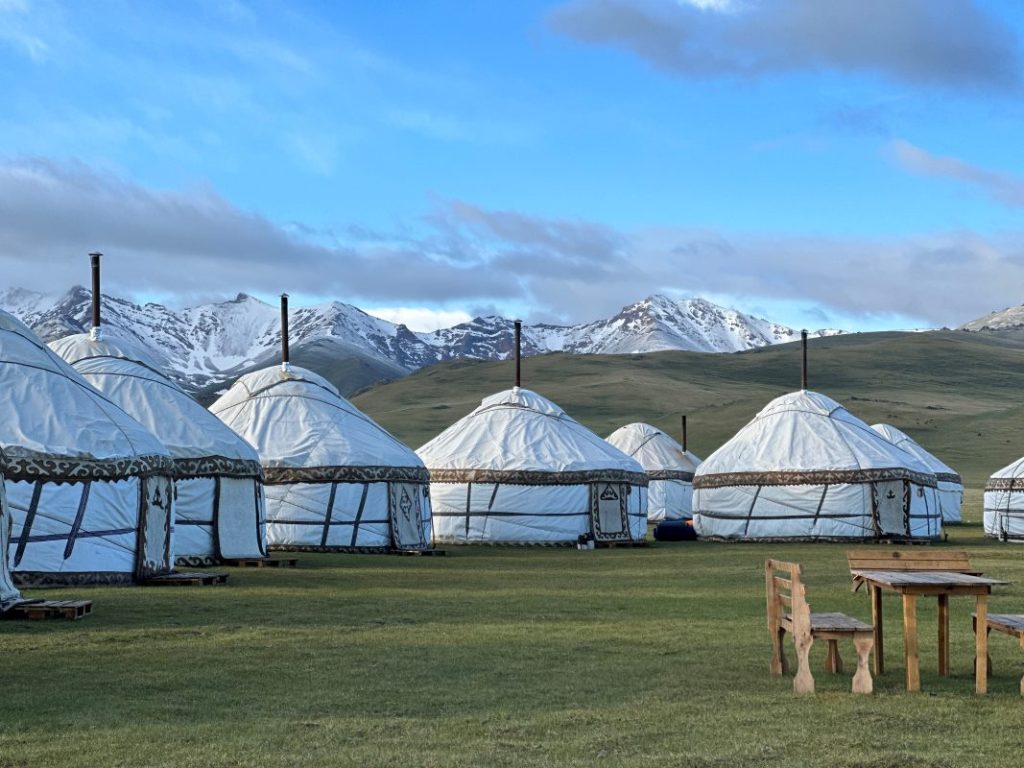
Tourist Yurts: Some guided tours include yurts or tents with basic facilities.
Safety: Stay clear of the crater edge — it is unstable and extremely hot.
Supplies: Bring water, food, and sun protection; the desert is remote.
Clothing: Lightweight, breathable clothing for the day; warm layers for desert nights.
Guides: Highly recommended for safe navigation and local knowledge.
Respect the Environment: The crater is fragile; avoid leaving litter or damaging the site.
Karakum Desert: Explore vast sand dunes and desert landscapes.
Ashgabat: Visit the capital with its modern architecture and historical museums.
Kunya-Urgench: UNESCO World Heritage site with ancient monuments, approx. 400 km north.
Yangykala Canyon (Turkmenistan): Spectacular red cliffs and gorges, approx. 500 km northwest.
Have Questions? We’ve Got You Covered!
Not ready to book yet? No problem! You can reach out to us anytime — we’re happy to provide all the information, tips, and guidance you need to plan your perfect trip, even if you haven’t booked with us yet. Your journey starts with the right advice, and we’re here to help every step of the way.
Whatsapp: +996224777992
Email: Kyzart.travel@gmail.com