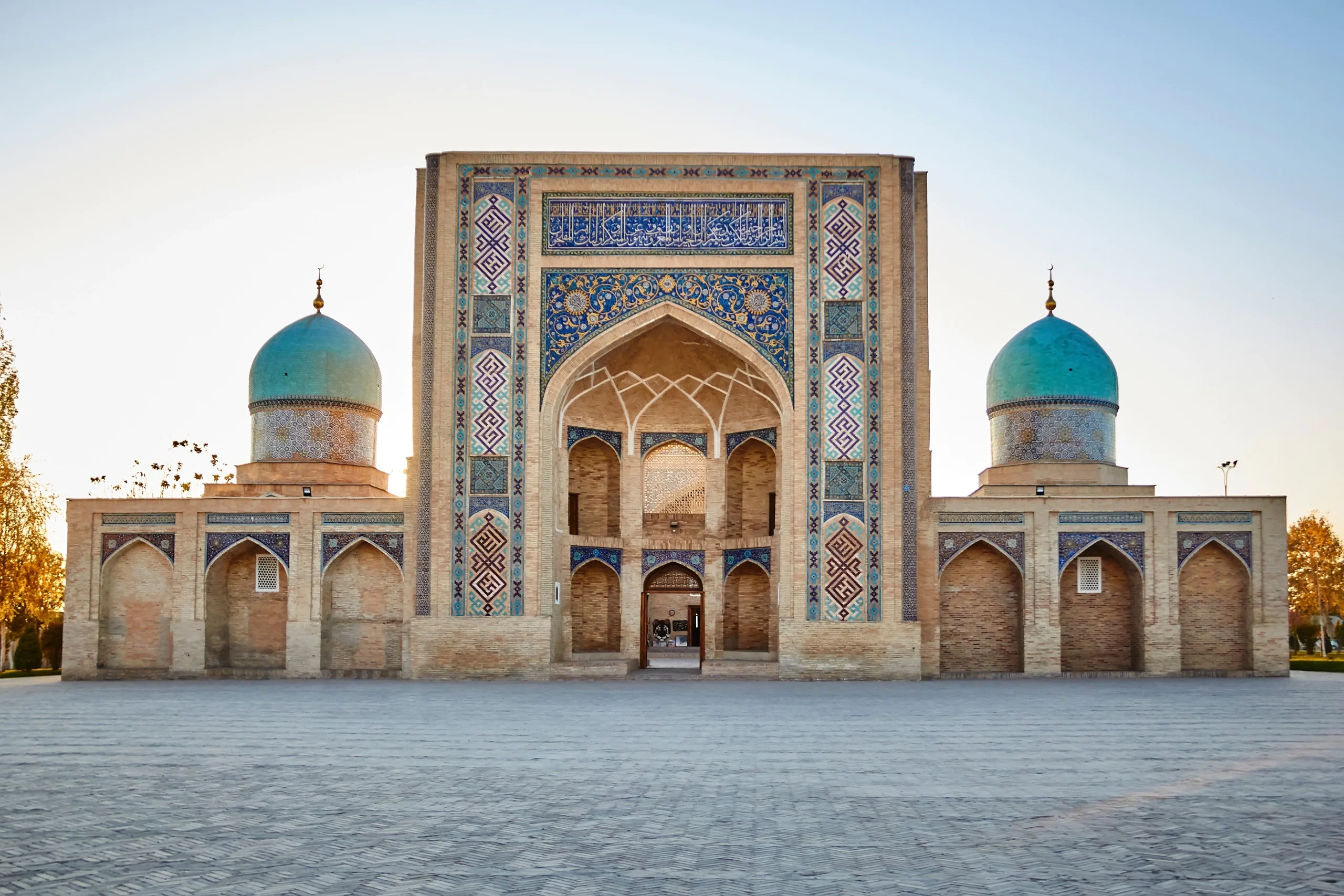
Tashkent is the capital and largest city of Uzbekistan, with a rich blend of Soviet-era architecture, modern skyscrapers, and historic Islamic landmarks. With a population of over 2.5 million, it is the country’s political, cultural, and economic hub.
Tashkent serves as a gateway to Central Asia, connecting travelers to other Silk Road cities such as Samarkand and Bukhara. The city offers a mix of history, culture, and modern urban life, with metro stations decorated like underground palaces and a thriving local market scene.
Country: Uzbekistan
Region: Tashkent Region
Coordinates: 41.2995° N, 69.2401° E
Accessibility: Tashkent is served by Tashkent International Airport, high-speed trains, and road networks.
It is located in the northeastern part of Uzbekistan, close to the Tian Shan mountains and bordering Kazakhstan to the north.
Blend of Cultures: Soviet-era buildings alongside ancient mosques and madrasahs.
Urban & Cultural Hub: Museums, galleries, theaters, and public squares abound.
Gateway to Silk Road Cities: Easy access to Samarkand, Bukhara, and Khiva.
Modern Comforts: Hotels, restaurants, and transport options for travelers.
Architecture & Design: Metro stations are famous for their intricate designs, mosaics, and chandeliers.
Religious center featuring the Kafal Shashi Mosque, Barak-Khan Madrasah, and Tillya Sheikh Library.
Houses one of the oldest Qur’ans in the world (7th century).
Central square of Tashkent featuring monuments, fountains, and government buildings.
Surrounded by museums, cafes, and walking paths.
Traditional market offering fresh produce, spices, bread, silk, and handicrafts.
Iconic blue-domed structure in the heart of Tashkent’s old town.
Comprehensive museum tracing Uzbekistan’s history from ancient to modern times.
Includes Silk Road artifacts, archeological finds, and ethnographic exhibits.
Bustling public square dedicated to Tamerlane (Timur).
Surrounded by statues, gardens, and nearby hotels.
One of the most beautiful metro systems in the world.
Each station is uniquely decorated with marble, chandeliers, and mosaics.
A historic venue offering music, ballet, and cultural performances.
Spring (March – May): Pleasant weather and blooming parks.
Autumn (September – November): Comfortable temperatures for walking tours.
Summer (June – August): Hot and dry; early mornings and evenings are best.
Winter (December – February): Cold, occasional snow; fewer tourists.
Walking Tours: Explore historic districts, parks, and mosques.
Metro Exploration: Take photos of artistic and ornate stations.
Shopping: Visit Chorsu Bazaar and modern shopping malls.
Cultural Experiences: Attend performances at theaters or visit art galleries.
Cuisine: Sample plov, samsa, lagman, shashlik, and street food.
Luxury Hotels: Centrally located with modern amenities.
Mid-range Hotels & Guesthouses: Affordable and comfortable.
Budget Options: Hostels and smaller guesthouses, good for backpackers.
By Air: Tashkent International Airport, with flights from Europe, Asia, and neighboring Central Asian countries.
By Train: High-speed trains connect Tashkent to Samarkand, Bukhara, and other cities.
By Road: Well-connected highways and buses to nearby cities.
Tip: The high-speed rail network makes day trips to Samarkand and Bukhara easy.
Dress Modestly: Respect local customs in religious sites.
Local Currency: Uzbekistani Som (UZS). Credit cards are widely accepted in modern areas.
Transport: Metro and taxis are convenient; ride-hailing apps are available.
Language: Uzbek is official; Russian is widely spoken. English is limited outside tourist areas.
Safety: Tashkent is very safe; standard urban precautions apply.
Chimgan & Charvak: Mountains and lakes for hiking, skiing, and nature trips (~1.5 hours).
Samarkand: Silk Road city with Registan and historical architecture (~2–3 hours by train).
Bukhara: Ancient city with mosques and madrasahs (~6–7 hours by road).
Fergana Valley: Cultural and agricultural region with traditional crafts (~3–4 hours).