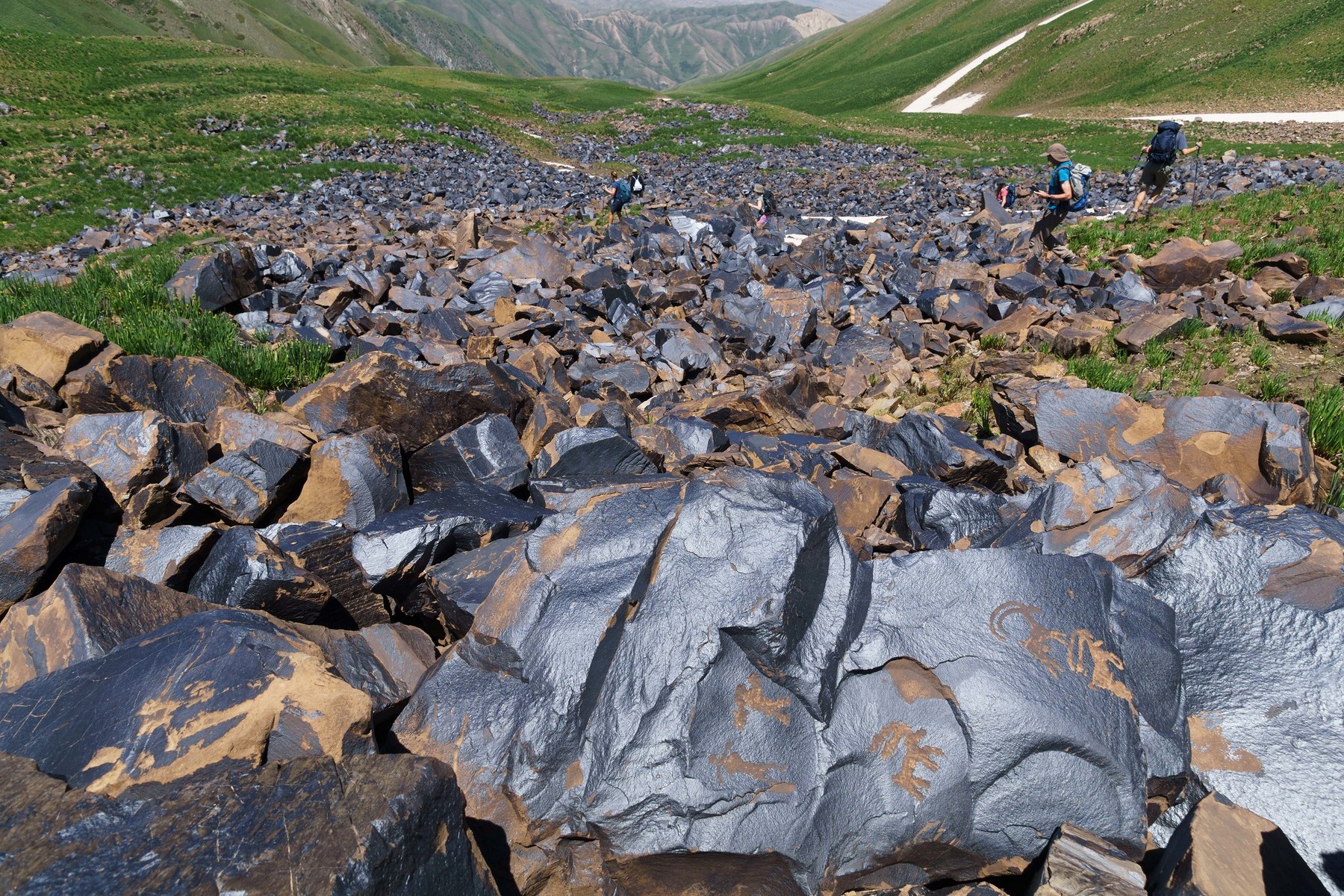
Saimaluu‑Tash is one of the largest and most significant petroglyph sites in Central Asia. Nestled high in the Ferghana Range of the southern Tian Shan Mountains, this remote archaeological and cultural treasure features thousands of ancient rock carvings scattered across alpine valleys at about 3,000–3,500 m above sea level.
The name Saimaluu‑Tash translates to “patterned (or embroidered) stones” in Kyrgyz, reflecting the rich tapestry of symbols, figures, and imagery carved into basalt rocks over millennia.
Saimaluu‑Tash is located in the Jalal‑Abad Region, within the Toguz‑Toro District, south of the small town of Kazarman.
~ 30 km south of Kazarman (a mountain village and common base for visitors)
Lies in two high mountain valleys separated by a low ridge
Elevation: roughly 3,000–3,500 m (9,800–11,500 ft) above sea level
Due to the high elevation, snow covers the site most of the year, and it is generally accessible only in August when the snow melts and trails are open.
Saimaluu‑Tash is a must‑visit for cultural historians, hikers, nature photographers, and adventurous travelers because of:
Enormous petroglyph collection: Up to 90,000 individual carvings recorded on thousands of stones.
Ancient rock art spanning millennia: From the Neolithic and Bronze Age (3000–2000 BC) into the Middle Ages.
Rich representations of animals (ibex, horses, wolves), humans, hunting scenes, ritual dances, geometric signs, mythological figures, and symbols.
A sacred and ritual site used by prehistoric peoples for offerings, spiritual rites, and cultural expressions.
Stunning high mountain landscape and off‑the‑beaten‑track experience.
Saimaluu‑Tash is so culturally rich that it’s on Kyrgyzstan’s UNESCO Tentative List for World Heritage status.
✔ August: The only practical visiting window when snow has melted and the site is reachable.
❗ July / September: Limited access depending on snow and weather conditions.
❄ Other months: Generally inaccessible due to snow cover at high altitude.
Because of its altitude and remote location, summer weather can still be cool in the morning and evening, and conditions change rapidly.
Walk among the natural galleries of carved stones — some stretches of rock art extend for several kilometers and reveal a fascinating visual history of ancient life, beliefs, and rituals.
Capture dramatic rock carvings and the vast alpine backdrop — sunrise and sunset are especially spectacular in the high mountains.
Learn about Central Asian prehistoric cultures through the content of the carvings: hunting scenes, animal motifs, spiritual symbols, and ritual imagery.
The remote location makes it perfect for multi‑day hiking or horseback adventures through high pastures. Many visitors camp near the petroglyph fields to enjoy the pristine mountain environment.
Drive from Kazarman village toward the Saimaluu‑Tash trailhead (off‑road 4×4 recommended).
From the trailhead, expect a long hike of several hours (sometimes a full day) or horseback ride up to the petroglyph valleys.
Remote mountain roads and alpine terrain require planning, good gear, and sometimes local guides.
Not suitable for regular cars — off‑road vehicles or horseback travel are standard in the final approach.
Guesthouses and homestays in Kazarman offer basic rooms and meals.
Camping in the high valley is common for adventurous visitors wanting to stay near the petroglyphs.
Plan your stay in Kazarman the night before trekking for the best access.
Altitude: Sites are at high elevation — acclimatize and prepare for cool weather.
Water & Supplies: Carry water, snacks, and essentials — services near the site are limited.
Guide/Local Support: Consider hiring a guide or arranging a horse with local residents for safer navigation.
Respect Heritage: These petroglyphs are cultural treasures — avoid touching or damaging carved surfaces.
Arslanbob – ancient walnut forests and waterfalls
Sary-Chelek Lake – high alpine lake and nature reserve